AHK Cinema · Movie Review
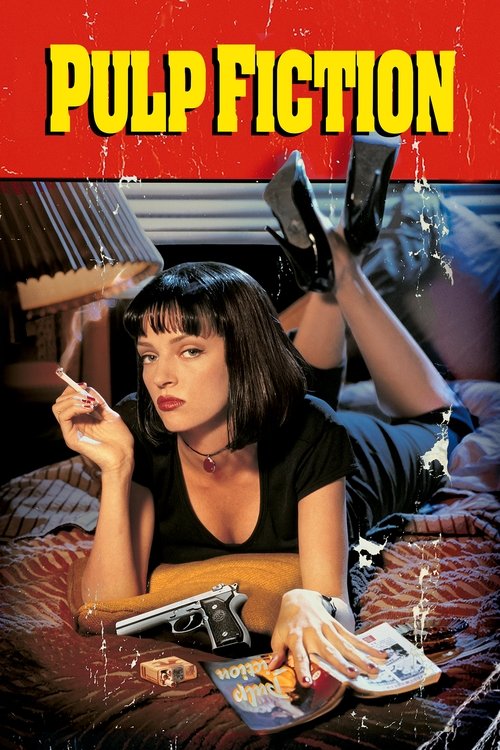
Pulp Fiction
1994 Dir. Quentin Tarantino 154 minBest for CEFR C1
Quentin Tarantino's masterpiece, Pulp Fiction, is a crime film like no other, weaving together intersecting storylines with dark humor and philosophical dialogue.
Things You Didn't Know
6 hidden details
1
Tarantino's Writing
Quentin Tarantino wrote the screenplay for Pulp Fiction in just three and a half weeks. The film's non-linear narrative was inspired by Tarantino's own experiences as a video store clerk, where he would often rearrange the order of scenes in movies to create new storylines.
2
John Travolta's Comeback
Pulp Fiction marked a significant comeback for John Travolta, who had not had a major film role in several years. His performance as Vincent Vega earned him an Academy Award nomination for Best Actor.
3
Uma Thurman's Dance
The iconic dance scene between Uma Thurman and John Travolta was filmed in one take. Thurman had to learn the dance routine in just a few days, and the scene has since become one of the most memorable moments in film history.
4
Samuel L. Jackson's Improvisation
Samuel L. Jackson improvised many of his lines as Jules Winnfield, including the famous 'Ezekiel 25:17' monologue. Jackson's performance earned him an Academy Award nomination for Best Supporting Actor.
5
The Briefcase
The contents of the briefcase that Marsellus Wallace sends to Brett are never revealed in the film. This has led to much speculation among fans, with some believing it contains gold, diamonds, or even the soul of Marsellus.
6
Non-Linear Storytelling
Pulp Fiction's non-linear narrative was a groundbreaking storytelling technique at the time of its release. The film's use of non-chronological ordering added to its complexity and rewatch value, making it a classic of modern cinema.
The Takeaway
Pulp Fiction teaches viewers about the power of storytelling and the importance of dialogue in film. For English learners, it's an invaluable resource for improving listening and speaking skills. We recommend watching the scene where Jules and Vincent discuss Big Kahuna Burgers with subtitles to get a feel for natural conversation.
The Learning Pack
Watch this film. Speak better English by Sunday.
Vocabulary, idioms, cultural context, and one scene broken down for shadowing practice.
Vocabulary (16)
ensemble
earlya group of people working together
"The film features an ensemble cast."
nuance
middlea subtle difference or shade of meaning
"The actor brought nuance to the character."
cyclical
middlehappening or done in a repeating cycle
"The film explores the cyclical nature of violence."
atmosphere
latethe feeling or mood of a place
"The film's use of music creates a unique atmosphere."
idiosyncratic
latehaving a peculiar or unusual character
"Tarantino's direction is idiosyncratic."
conversational
latelike a conversation
"The film's dialogue is conversational."
expositional
middleproviding information or explanation
"The film's dialogue is not expositional."
non-linear
earlynot happening in a straight line
"The film's narrative is non-linear."
chronological
middlehappening in the order of time
"The film's story is not told in chronological order."
speculation
latethe act of guessing or forming opinions
"There is much speculation about the contents of the briefcase."
groundbreaking
latenew or innovative
"The film's non-linear narrative was groundbreaking."
rewatch
lateto watch something again
"The film is worth a rewatch."
classic
lateof the highest quality
"Pulp Fiction is a classic film."
masterful
middleshowing great skill or expertise
"Tarantino's direction is masterful."
allure
earlya attractive or appealing quality
"The film's complexity adds to its allure."
superb
middleof very high quality
"The performances are superb."
Idioms & Expressions
trip back and forth
to move or travel back and forth
used to describe the non-linear narrative
converge
to come together or meet
used to describe the characters' storylines
wash-up
to fail or decline
used to describe the boxer's career
big Kahuna Burger
a fictional fast food restaurant
used in a conversation between Jules and Vincent
Royale with cheese
a Quarter Pounder with cheese
used in a conversation between Jules and Vincent
Cultural References
Big Kahuna Burger
a fictional fast food restaurant that appears in several Tarantino films
Quarter Pounder
a type of hamburger sold by McDonald's
Ezekiel 25:17
a biblical passage that is quoted by Jules in the film
gold watch
a symbol of tradition and heritage in the film
Scene Breakdown for Shadowing
around 00:42:00
Jules: 'You know what they call a Quarter Pounder with cheese in Paris?'
Vincent: 'They don't call it a Quarter Pounder with cheese?'
Jules: 'No, man, they got the metric system, they wouldn't know what a Quarter Pounder is.'
Vincent: 'What do they call it?'
This scene is a great example of conversational dialogue, with the characters discussing the differences between American and European culture. The vocabulary used is informal and conversational, making it a good scene for learners to practice their listening skills. The use of idioms, such as 'what do they call it', is also a good opportunity for learners to practice their understanding of phrasal verbs. To practice shadowing, learners can try repeating the dialogue after the characters, paying close attention to the rhythm and intonation of the speech.
Watching films isn't enough — you need a plan.
Take the free placement test. We'll match you with a cohort built around films + structured practice.
Start Free Placement Test