AHK Cinema · Movie Review
Oppenheimer
2023 Dir. Christopher Nolan 181 minBest for CEFR C1
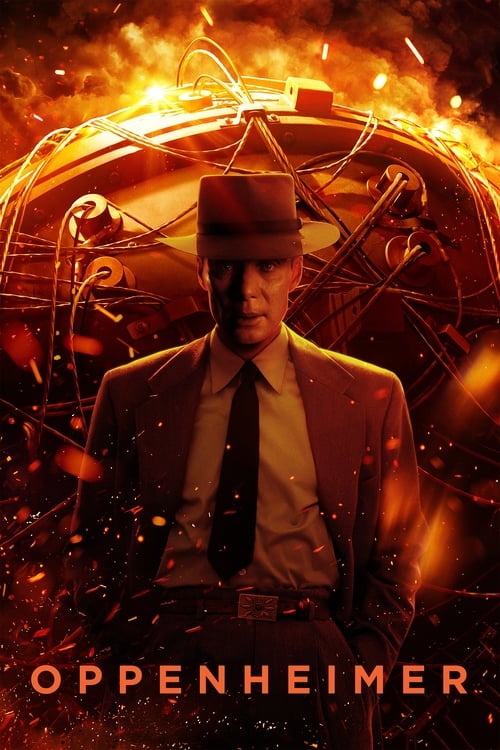
Christopher Nolan's *Oppenheimer* is a gripping biographical drama that delves into the life of J. Robert Oppenheimer, the father of the atomic bomb. With its complex characters and historical significance, this film is a must-watch for anyone interested in history, science, or drama.
Things You Didn't Know
6 hidden details
1
Casting Story
Cillian Murphy was cast as Oppenheimer after a long and rigorous selection process. Murphy spent months researching Oppenheimer's life and personality to prepare for the role. He also worked closely with Christopher Nolan to develop the character.
2
Historical Accuracy
The film's script was heavily researched to ensure historical accuracy. The production team consulted with historians and experts to recreate the events and settings of Oppenheimer's life. The film's attention to detail is evident in its costumes, sets, and dialogue.
3
Behind-the-Scenes
The film was shot on location in several countries, including the United States and the United Kingdom. The production team used a combination of digital and film cameras to capture the footage. The film's score was composed by Ludwig Göransson, who worked closely with Christopher Nolan to create a haunting and atmospheric soundtrack.
4
Oppenheimer's Legacy
J. Robert Oppenheimer is widely regarded as one of the most important scientists of the 20th century. His work on the atomic bomb helped to bring an end to World War II, but it also raised important questions about the ethics of scientific discovery. Oppenheimer's legacy continues to be felt today, with his work remaining a topic of debate and discussion among scientists, historians, and philosophers.
5
Nolan's Inspiration
Christopher Nolan was inspired to make the film after reading a biography of Oppenheimer. Nolan was fascinated by Oppenheimer's complex personality and the moral dilemmas he faced during his work on the atomic bomb. Nolan saw the story as an opportunity to explore themes of morality, responsibility, and the consequences of scientific discovery.
6
Production Challenges
The production team faced several challenges during filming, including the need to recreate the complex scientific equipment and settings of Oppenheimer's time. The team also had to navigate the complexities of filming in multiple locations and dealing with the logistical challenges of a large-scale production.
The Takeaway
In conclusion, Oppenheimer is a powerful and thought-provoking film that explores the life and legacy of J. Robert Oppenheimer. The film teaches viewers about the importance of considering the consequences of scientific discovery and the need for moral responsibility in the face of great power. For English learners, I recommend watching the scene where Oppenheimer testifies before the Atomic Energy Commission with subtitles to improve your understanding of formal, professional language.
The Learning Pack
Watch this film. Speak better English by Sunday.
Vocabulary, idioms, cultural context, and one scene broken down for shadowing practice.
Vocabulary (16)
nuanced
earlycomplex and subtle
"The film's portrayal of Oppenheimer is nuanced and multifaceted."
morality
middlethe principles of right and wrong behavior
"The film raises important questions about morality and the ethics of scientific discovery."
consequences
latethe results of a particular action or decision
"The film explores the consequences of Oppenheimer's work on the atomic bomb."
ensemble
earlya group of actors who perform together
"The film features an ensemble cast, including Cillian Murphy and Emily Blunt."
meticulous
middlepaying great attention to detail
"Christopher Nolan's direction is meticulous and detailed."
thought-provoking
latemaking you think deeply about something
"The film is thought-provoking and raises important questions about the ethics of scientific discovery."
legacy
latethe impact or influence of someone or something after they are gone
"Oppenheimer's legacy continues to be felt today."
atmospheric
middlecreating a particular mood or feeling
"The film's score is atmospheric and haunting."
logistical
laterelated to the planning and organization of something
"The production team faced logistical challenges during filming."
multifaceted
earlyhaving many different aspects or features
"The film's portrayal of Oppenheimer is multifaceted and nuanced."
rigorous
earlythorough and exhaustive
"The selection process for the role of Oppenheimer was rigorous and demanding."
consulted
middlesought advice or information from someone
"The production team consulted with historians and experts to ensure historical accuracy."
evident
middleclearly visible or apparent
"The film's attention to detail is evident in its costumes and sets."
haunting
middleremaining in your mind and making you feel sad or uncomfortable
"The film's score is haunting and atmospheric."
philosophers
latepeople who study and think about fundamental questions about existence and knowledge
"Oppenheimer's legacy continues to be discussed by historians, scientists, and philosophers."
biography
earlya written account of someone's life
"Christopher Nolan was inspired to make the film after reading a biography of Oppenheimer."
Idioms & Expressions
play with fire
to take a risk or do something dangerous
used in a scene where Oppenheimer discusses the dangers of the atomic bomb
raise questions
to cause people to think about or discuss something
used in a scene where the film's characters discuss the ethics of scientific discovery
face the music
to accept the consequences of your actions
used in a scene where Oppenheimer testifies before the Atomic Energy Commission
make a name for yourself
to become famous or well-known
used in a scene where Oppenheimer's work on the atomic bomb is recognized
leave a mark
to have a lasting impact or influence
used in a scene where Oppenheimer's legacy is discussed
Cultural References
Manhattan Project
a secret research and development project that produced the atomic bomb during World War II
Atomic Energy Commission
a US government agency responsible for regulating the use of atomic energy
Los Alamos National Laboratory
a US research laboratory where the atomic bomb was developed
Trinity test
the first nuclear test, conducted in New Mexico in 1945
Scene Breakdown for Shadowing
around 00:42:00
Oppenheimer: 'I am become Death, destroyer of worlds.'
Interviewer: 'What do you mean by that?'
Oppenheimer: 'I mean that we have created a power that can destroy entire cities.'
Interviewer: 'And what do you think is the moral implications of this?'
Oppenheimer: 'I think it is a profound responsibility, one that we must consider carefully.'
This scene is powerful for learners because it showcases Oppenheimer's complex personality and his thoughts on the morality of scientific discovery. The vocabulary used is formal and professional, making it a great opportunity for learners to practice their listening and comprehension skills. The scene also highlights the use of idioms, such as 'play with fire' and 'face the music', which are commonly used in English. To practice, learners can try shadowing the dialogue, repeating the lines spoken by the characters to improve their pronunciation and intonation.
Watching films isn't enough — you need a plan.
Take the free placement test. We'll match you with a cohort built around films + structured practice.
Start Free Placement Test