AHK Cinema · Movie Review
Gladiator II
2024 Dir. Ridley Scott 148 minBest for CEFR B2
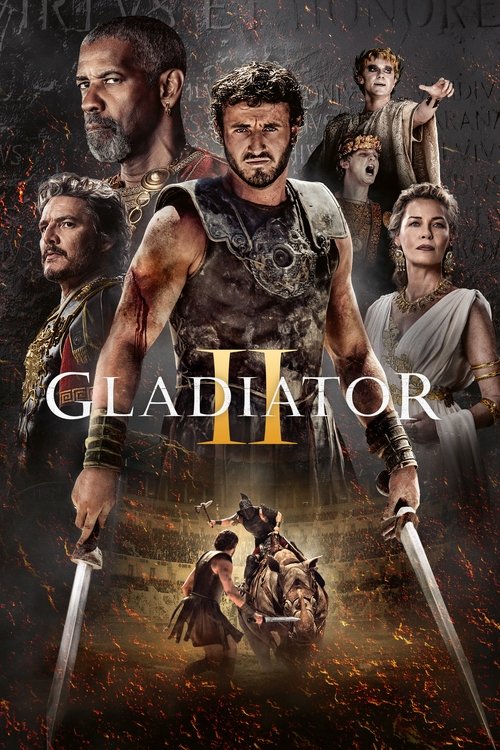
Get ready for the epic return to the Roman Empire with Gladiator II, directed by the renowned Ridley Scott, as Lucius seeks to reclaim Rome's glory.
Things You Didn't Know
6 hidden details
1
Ridley Scott Returns
Ridley Scott returns to direct Gladiator II, bringing his expertise in epic historical dramas. Scott's involvement ensures a level of quality and depth that fans of the original will appreciate. His direction has been praised for its ability to balance action and drama.
2
New Hero Emerges
The film introduces Lucius as the new hero, offering a fresh perspective on the Gladiator universe. This character development allows for new storylines and character arcs, keeping the franchise fresh. The choice of Lucius as the protagonist opens up opportunities for exploring different themes and motifs.
3
Historical Accuracy
The production team consulted historians to ensure a high level of historical accuracy in the film's depiction of ancient Rome. From the architecture to the clothing, every detail was considered to immerse viewers in the ancient world. This attention to detail enhances the overall authenticity of the movie.
4
Cinematography Innovations
The cinematography in Gladiator II incorporates the latest technologies to capture the grandeur and beauty of Rome. Innovative camera techniques and lighting designs were used to create visually stunning scenes. These innovations contribute to the film's epic feel and cinematic experience.
5
Cast Selection
The cast was selected based on their ability to portray complex characters with depth and nuance. The actors underwent extensive training to prepare for their roles, particularly for the demanding scenes in the Colosseum. This preparation is evident in their performances, which are both compelling and believable.
6
Location Shooting
Parts of the film were shot on location in countries with landscapes reminiscent of ancient Rome. This choice added to the film's authenticity and provided a unique backdrop for the story. The combination of location shooting and studio work helped to recreate the ancient world convincingly.
The Takeaway
Gladiator II is not just a film about ancient Rome; it's a story about the human quest for justice and freedom. Viewers are taught about the importance of standing up against tyranny and the power of one's convictions. For English learners, watching the scene where Lucius first enters the Colosseum with subtitles can be particularly beneficial, as it exposes them to a variety of vocabulary and dialogue in context.
The Learning Pack
Watch this film. Speak better English by Sunday.
Vocabulary, idioms, cultural context, and one scene broken down for shadowing practice.
Vocabulary (16)
tyranny
earlya system of government in which one person has complete power
"The people suffered under the tyranny of the Emperors."
revered
introductionrespected and admired
"Maximus was a revered hero."
conquer
middleto take control of a place by force
"The Emperors conquered Lucius's home."
resilience
latethe ability to withstand or recover from difficult conditions
"Lucius showed great resilience in the face of adversity."
meticulous
middlepaying great attention to detail
"Ridley Scott is known for his meticulous direction."
grandeur
latethe quality of being grand and impressive
"The film captures the grandeur of ancient Rome."
intensity
middlea high level of energy or strength
"The battles in the Colosseum were filled with intensity."
cinematography
latethe art of photography and camera work in film
"The cinematography in Gladiator II is breathtaking."
narrative
latea story or account of events
"The film provides a rich narrative for English learners."
authenticity
middlethe quality of being genuine or real
"The film's attention to historical detail adds to its authenticity."
nuance
middlea subtle difference or shade of meaning
"The actors brought nuance to their characters."
believe
lateto think that something is true or real
"The actors' performances made their characters believable."
complex
middleconsisting of many different and connected parts
"The characters in the film are complex and multi-dimensional."
depth
latea measure of how much something extends downwards or inwards
"The film has a lot of depth in terms of character development."
extensive
middlecovering or affecting a large area
"The actors underwent extensive training for their roles."
innovative
lateintroducing new or original ideas
"The film's cinematography is innovative and groundbreaking."
Idioms & Expressions
at stake
something that might be lost or won
used in discussions about the future of Rome
in the heart of
in the central or most important part of something
used to describe locations in ancient Rome
stand up against
to oppose or resist something
used in the context of fighting against tyranny
by force
using strength or violence
used to describe the Emperors' conquest
in context
within the surrounding circumstances or facts
used to advise watching scenes with subtitles
Cultural References
Ancient Roman Architecture
Ancient Rome was known for its impressive architectural achievements, including the Colosseum, which is featured prominently in the film. Understanding the cultural significance of these structures can enhance the viewing experience.
Roman Empire
The Roman Empire was a vast and powerful state that existed from 27 BC to 476 AD. It was known for its military prowess, administrative systems, and cultural achievements. The film touches on the decline of the Empire and the rise of tyranny.
Gladiatorial Combat
Gladiatorial combat was a form of entertainment in ancient Rome where gladiators would fight each other or wild animals. The film depicts these battles in detail, highlighting their brutality and the skill of the gladiators.
Roman Values
The film explores traditional Roman values such as honor, courage, and loyalty. These values are central to the story and characters, providing insight into the Roman culture and way of life.
Scene Breakdown for Shadowing
around 00:42:00
Lucius: 'I will not back down.'
 Emperor: 'We will see about that.'
 Lucius: 'You may have the power, but I have the people.'
 Emperor: 'The people are nothing without a leader.'
 Lucius: 'And a leader is nothing without the people.'
This scene is powerful for learners because it showcases a confrontation between Lucius and the Emperor, highlighting themes of power, leadership, and the relationship between rulers and the people. The dialogue is rich in vocabulary and idioms, such as 'back down' and 'have the power.' Learners can practice shadowing the actors to improve their pronunciation and intonation. The scene also provides a good example of how to use rhetorical questions and statements in a conversation, making it a valuable resource for language learning.
Watching films isn't enough — you need a plan.
Take the free placement test. We'll match you with a cohort built around films + structured practice.
Start Free Placement Test